Creamy Chicken Alfredo Pasta: The Restaurant Classic You Can Make Better at Home
There’s a reason chicken alfredo shows up on nearly every Italian-American restaurant menu, and it’s the same reason it’s one of the most searched comfort food recipes online: it’s rich, it’s satisfying, and it hits that exact craving for something warm and indulgent. The good news is that this dish, despite its reputation as a “restaurant recipe,” is genuinely simple to make at home — and often turns out better than what you’d get served in a restaurant booth, because you control exactly how rich, garlicky, and cheesy the sauce gets.
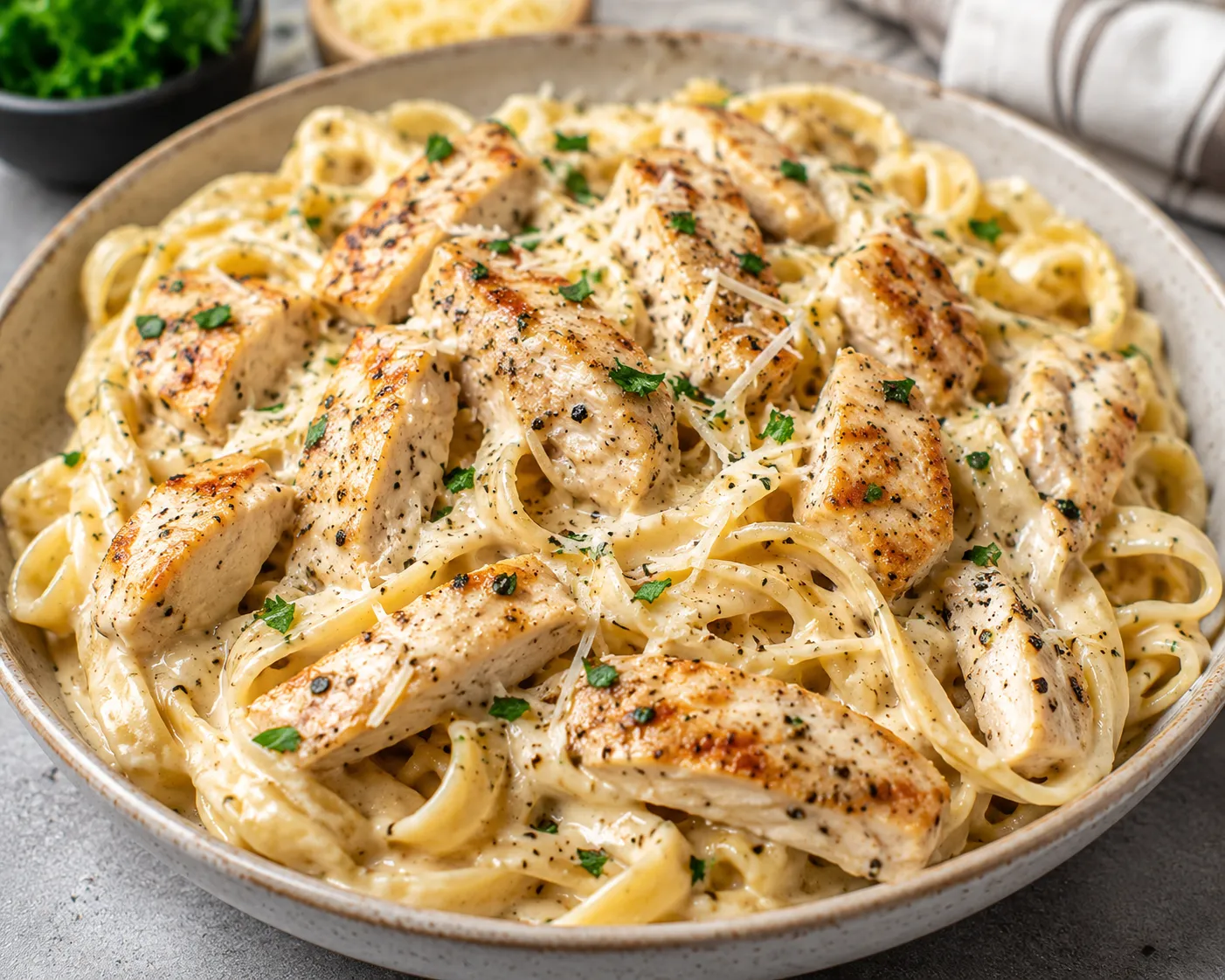
This version comes together in one pan, uses ingredients you can find at any grocery store, and takes about 30 minutes from start to finish. No jarred sauce, no shortcuts that sacrifice flavor — just a proper, silky homemade alfredo sauce draped over tender pasta and juicy seared chicken.
Why Homemade Alfredo Beats the Jar Every Time
It’s worth saying clearly: jarred alfredo sauce and homemade alfredo sauce are not really the same dish. Store-bought versions tend to rely on stabilizers and thickeners to survive on a shelf, which often leaves them tasting flat, overly starchy, or strangely sweet. A real alfredo sauce, on the other hand, is built from just a few ingredients — butter, garlic, cream, and good parmesan — simmered together until they naturally thicken into something glossy and rich.
The other advantage of making it yourself is control. You can adjust the garlic level up or down, use freshly grated parmesan instead of the pre-shredded kind (which matters more than you’d think), and season it exactly to your taste rather than working around whatever a jar decided for you. Once you’ve made it from scratch a couple of times, it’s genuinely hard to go back.
The Two Components That Make This Dish Work
Chicken alfredo really comes down to two separate elements done well: properly seared chicken, and a properly built sauce. Neither one is difficult, but skipping the details on either can leave you with something bland or greasy instead of restaurant-quality.
For the chicken, the goal is a deep golden sear on the outside while keeping the inside juicy. Boneless chicken breast is the traditional choice here since it slices neatly and looks classic on the plate, but the technique matters more than the cut — searing at the right heat, not overcrowding the pan, and letting the chicken rest before slicing all make a bigger difference than which chicken part you use.
For the sauce, everything comes down to build order and heat control. Garlic gently sautéed in butter first, then cream added and allowed to warm through before the cheese goes in, produces a smooth, emulsified sauce. Adding cold cream too quickly to a hot pan, or dumping in cheese over heat that’s too high, are the two most common ways an alfredo sauce breaks or turns grainy.
Ingredients You'll Need
12 oz fettuccine pasta
2 boneless chicken breasts
Salt and pepper, to taste
2 tbsp olive oil
3 tbsp butter
4 garlic cloves, minced
2 cups heavy cream
1 cup grated parmesan cheese
½ tsp Italian seasoning
2 tbsp fresh parsley, chopped, for garnish
Fettuccine is the traditional pasta shape for alfredo, and for good reason — its wide, flat surface holds onto the creamy sauce far better than thinner shapes like spaghetti or angel hair. Heavy cream is non-negotiable here too; lighter creams or milk will leave you with a thin, watery sauce that won’t properly coat the pasta. And while pre-shredded parmesan is convenient, it’s coated in anti-caking agents that keep it from melting smoothly — freshly grated parmesan makes a noticeably silkier sauce.
Step-by-Step Method
Step 1: Cook the pasta. Bring a large pot of well-salted water to a boil and cook the fettuccine according to the package instructions until al dente. Before draining, scoop out and reserve about a cup of the starchy pasta water — this is your safety net if the sauce needs loosening later. Drain the pasta and set it aside.
Step 2: Sear the chicken. While the pasta cooks, season the chicken breasts generously with salt and pepper. Heat the olive oil in a large skillet over medium-high heat and sear the chicken for 5 to 6 minutes per side, until deeply golden and cooked through to 165°F internally. Remove the chicken from the pan and let it rest for a few minutes before slicing — this keeps the juices inside the meat rather than spilling out onto the cutting board.
Step 3: Sauté the garlic. In the same skillet you used for the chicken — don’t clean it, those browned bits are flavor — melt the butter over medium heat. Add the minced garlic and sauté for just 30 to 60 seconds, until fragrant. Garlic burns quickly, so keep a close eye on it here.
Step 4: Build the sauce. Pour in the heavy cream, then whisk in the parmesan cheese and Italian seasoning. Let the sauce simmer gently for 3 to 4 minutes, stirring frequently, until it thickens slightly and turns glossy. Keep the heat moderate rather than high — a gentle simmer is all this sauce needs.
Step 5: Combine with the pasta. Add the drained fettuccine directly into the skillet with the sauce and toss to coat every strand. If the sauce feels too thick to move freely, add the reserved pasta water a splash at a time until it loosens to a silky, pourable consistency.
Step 6: Serve. Top the pasta with the sliced chicken and finish with a scattering of fresh chopped parsley for a bit of color and freshness against the richness of the sauce.
Tips for a Silky, Never-Grainy Sauce
A handful of small details make the difference between a sauce that’s glossy and smooth versus one that breaks or turns clumpy.
Use freshly grated parmesan. This is the single biggest factor in sauce texture. Pre-shredded cheese simply won’t melt as evenly.
Keep the heat moderate once the cream goes in. High heat can cause the dairy to separate. A gentle simmer is all you need to thicken the sauce properly.
Add cheese gradually, off direct high heat. Whisking the parmesan in while the pan is at a controlled simmer, rather than a hard boil, helps it melt smoothly into the cream instead of clumping.
Save that pasta water. The starch in reserved pasta water is a natural thickener and emulsifier — a splash at the end can rescue a sauce that’s gone slightly too thick or separated.
What to Serve Alongside It
Chicken alfredo is rich enough to stand on its own, but a few sides round the meal out nicely. Garlic bread is the classic pairing, useful for scraping up any extra sauce left on the plate. A simple green salad with a sharp vinaigrette provides a welcome contrast to the richness of the dish. Steamed or roasted broccoli is another popular addition, both for its color and for the way it holds onto the sauce in its little florets.



You must be logged in to post a comment.